
Lockhart: The Barbecue Capital of Texas
Lockhart’s barbecue may draw the crowds, but its architecture, artisans, and growing community keep them coming back.


The hot air Texas is known for doesn’t always come exclusively from the weather. There’s a good chance some of it emanates from the bragging us Texans like to do. Now, some of those boasts ring truer than others, but in the case of Lockhart, the claim to being the Barbecue Capital of Texas is credible.
Lockhart is home to three widely famed barbecue restaurants: Black’s Market, Kreuz’s Market, and Smitty’s. I scheduled this trek to Lockhart because while I’ve been before and previously covered several nearby towns—including Luling, its historic rival—I wanted to return and see how the town has evolved beyond the smoked meats.
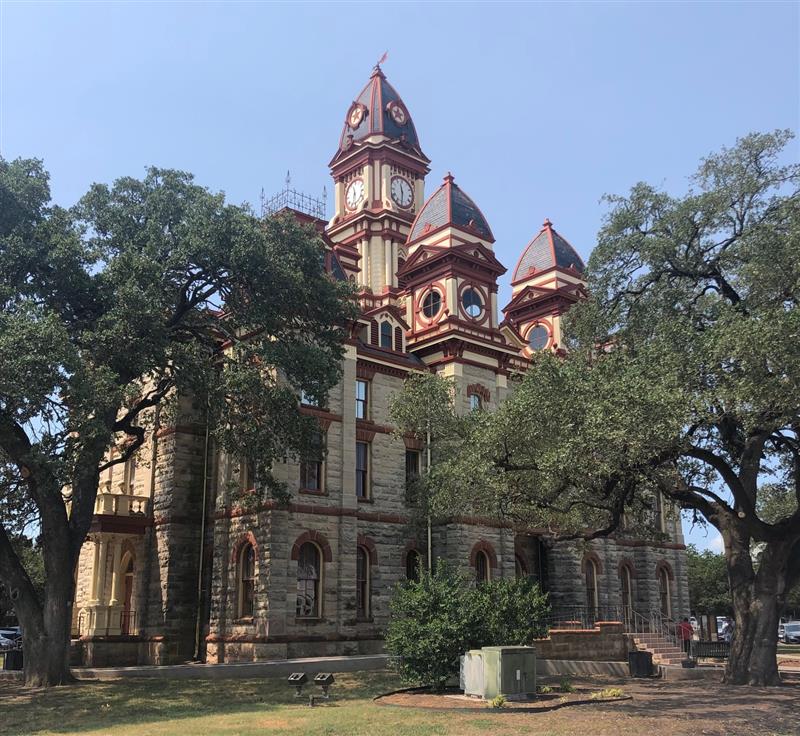
Lockhart’s population is growing at a rate of about 2 percent per year. As of 2025, the population stands at a reported 15,960. The county seat of Caldwell County is located there and the courthouse is a spectacular sight to behold. When I was there, street construction (part of a downtown revitalization project) was underway across downtown. The architecture of the historic business district is captivating. Not many towns of this size have three-story buildings anchoring their footprint on the landscape. Lockhart has that and a lot more.
The History of Lockhart
Located at the intersection of US 183 and SH 142, 30 miles southeast of Austin, the town is named after Byrd Lockhart. He was an assistant surveyor to Green DeWitt who made his living surveying land throughout Central Texas. Lockhart bartered a deal exchanging his survey work and the roads he built for land along Plum Creek. The land he acquired in 1831 later became the townsite. Settlement was slow in the area at first due to the threat of Indian raids, but after the Battle of Plum Creek in 1840 which pushed the Comanche Indians westward, families eventually moved into the area. In 1848, Caldwell County was established, and the new town of Lockhart became the county seat.
In the late 1860s, Lockhart became a significant part of the Chisolm Trail, triggering the town’s development as a trading center. The completion of the Lockhart-San Marcos section of the Missouri–Kansas–Texas Railroad gave the town access to outside markets and facilitated new growth. Lockhart became an important center for processing cotton and cotton products.

By the early 1900s, the Dr. Eugene Clark Library was built and is said to be the oldest continuously operating city library in Texas. Neighboring Luling got a leg up on Lockhart by scoring the first rail service and then again in the 1920s with the discovery of oil in the Luling oilfield. Luling garnered much economic progress in those eras, but Lockhart continued to grow. Agriculture dominated the economy with cotton gins and compresses, creamery, poultry processing, peanut processing, and livestock marketing and shipping being the main drivers.
Not Another Bedroom Community
The town’s growth leveled off, and local leaders became concerned the town would become just another bedroom community to Austin. In 1973, they formed the Lockhart Industrial Foundation to attract new industries. Some of the first new industries were scientific and technology-driven, and a privately-owned prison was also built, adding more stable jobs. In 1978, the courthouse and several blocks of downtown Lockhart were listed on the National Register of Historic Places, adding fuel to a burgeoning tourism industry.
Today, the local economy revolves around county government services, light manufacturing, a still thriving agribusiness sector, tourism, restaurants and entertainment, retail sales, the prison, and professional services. Commuting is certainly a factor, but the Lockhart Economic Development Corporation counts on drawing workers from both the Austin and San Antonio metros to fuel their need for talent. Here are a few of the top employers with number of employees:
- Lockhart ISD: 790
- Walmart: 225
- Management and Training Corp: 175
- H.E.B: 170
- Pegasus School: 149
- City of Lockhart: 145
- The Ziegenfelder Company: 100
- Pure Castings: 75
- Fashion Glass/Mirror: 70
- Livengood Feeds 70
- First Lockhart National Bank: 57
Adding to the things Lockhart can brag about is Manny Gammage’s Texas Hatters, an iconic business that has served the likes of former presidents, Ronald Reagan, Jimmy Carter, George H.W. and George W. Bush, at least nine Texas Governors, and many of Texas’ best-known musicians like Wilie Nelson, Stevie Ray Vaughan, Jerry Jeff Walker, and too many others to list. The inside of the shop is lined with photos of celebrities wearing the shop’s creations in movies and personal use.
Looking Ahead in Lockhart
Lockhart is faring well. The city projects its population will double by 2040. Major homebuilders Lennar and DR Horton have established entry level housing beachheads here. Residents cite the low crime rate, quality schools, and lower cost of living, as well as lower taxes and a less stressful pace of life for reasons why they chose to live in Lockhart.
Lockhart State Park sits on the edge of town and offers recreational opportunities for residents and visitors alike. Clear Fork Creek, a tributary of the larger Plum Creek, flows through the middle of the 264-acre park. The dam makes an attractive waterfall when water flows are adequate. Some of the park’s facilities are historic, having been constructed between 1935 and 1938 by the Civilian Conservation Corps. The park also features a 9-hole golf course, hiking trails, camping, and special events.

I noted the prevalence of attractive bricks (both dark red and tan) used in many commercial and residential structures in town. It made sense that a local brick maker had to be the source. So, I did a little research and found that Lockhart native, Gus Birkner, was responsible for the construction of many of the historic buildings around the courthouse square. He had located a clay deposit between Luling and Lockhart. To ensure a reliable supply and lower his building costs, he bought machinery and a press and built a kiln to supply bricks for his expanding construction business. Over time, he looked for a higher quality clay and learned of a German immigrant who had started a small brick operation in D’Hanis, Texas, west of Hondo. Gus struck a deal, selling his L&L Brick Company, but retained a 10 percent interest. This deal assured him of a steady supply of the highest quality bricks. D’Hanis Brick went on to become one of the largest brick suppliers in Texas. This is just one of many examples I have uncovered, where a local small-town citizen who is passionate about their town and craft can have a positive impact that lasts generations.
Source attributions: History of Lockhart, The Texas State Historical Association; Economic statistics, Lockhart EDC, and Caldwell County History by Tim Schroeder
Views expressed on The 338 are those of the authors and do not imply endorsement by the Texas Real Estate Research Center, Division of Research, or Texas A&M University.


