
While most large national retail chains shun small towns, dollar stores have been successful in towns with populations as few as 300. Relative saturation (how many people one store serves) is one factor to consider in determining which communities can support more dollar stores.
Apr 3, 2013
Come Back to the 5 & Dime
Blink and you’re likely to miss a new dollar store opening in your neighborhood. In tiny towns and gigantic cities alike, they’re popping up like bluebonnets after an early spring rain.

Shopping is an American pastime. Erma Bombeck said that shopping was a contact sport like football. Bo Derek said whoever said money can’t buy happiness simply didn’t know where to go shopping. Tammy Faye Bakker suggested that shopping is cheaper than a psychiatrist. Oscar Wilde said that anyone who lives within their means suffers from a lack of imagination.
In the past decade, the concept of shopping has changed dramatically. With household incomes barely growing, more and more Americans are shopping at “dollar” stores. These stores locate in towns too small to attract national retailers as well as large cities, offering convenience and savings to local shoppers and sales tax revenue to the community.
Dollar Store Concept
It is generally accepted that the F.W. Woolworth Company was the pioneer of the five-and-dime store, the precursor of the dollar store concept.
The first Woolworth store opened in February 1878 in Utica, New York, under the banner “Woolworth’s Great Five Cent Store.” The stores sold discounted general merchandise at fixed prices that undercut local competitors. In addition to lower prices, Woolworth became popular for allowing the public to hand-select their own merchandise without the help of a sales clerk, which was previously common practice. This innovative approach changed the retail scene forever.
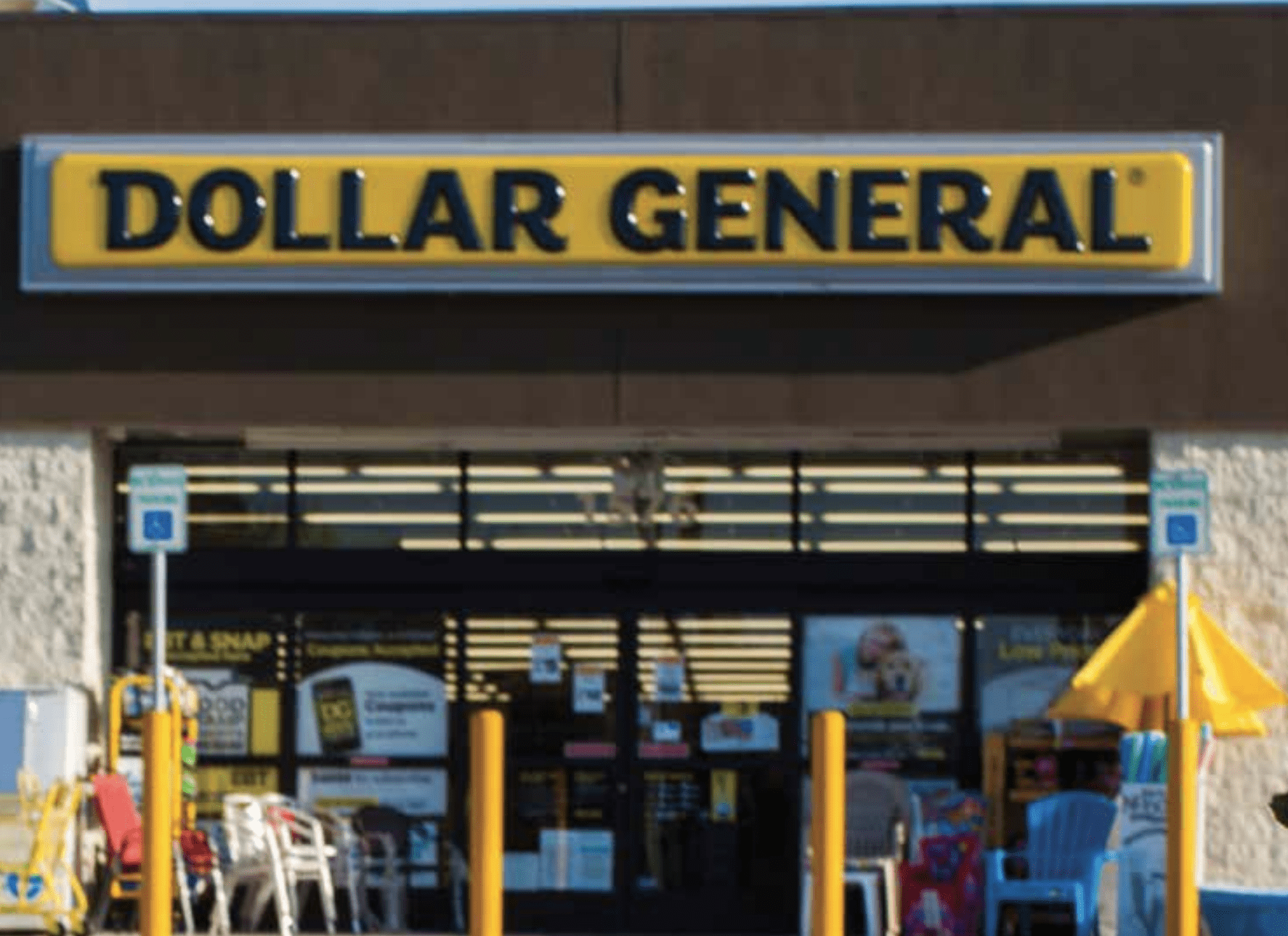
In the past decade, America has seen the continued development of dollar stores across the country. The largest are Dollar General, Dollar Tree and Family Dollar. These companies were inspired by F.W. Woolworth’s ability to deliver quality goods at deeply discounted prices.
These three retailers now have more than 20,000 stores nationally, with a huge presence in Texas (Table 1). Dollar General and Family Dollar have more stores in Texas than any other state.

The Real Estate Center used Google Maps to positively locate 968 stores for Dollar General, 855 for Family Dollar and 248 for Dollar Tree. In addition, 104 stores are doing business under names including Lucky Dollar, Dollar Savers, Dollar Depot, King Dollar, Just a Dollar, Dollar Plus, Senor Dollar, Super Dollar, Dollar and More, Dollar Supreme, Pearland Dollar Store Plus, Dolex Dollar Express and Mega $1.09.
Others include Cowboy Dollar Store, Dollar Selection, USA Dollar, Everything Dollar Plus, Global Dollar, Texas Dollar and More, Dollar Express, Save a Dollar, Super Dollar, Gotta Dollar, Wise Dollar, Dollar and Dollar, Dollar Deals and Dollar and More.

Prevalence in Small Towns
The smallest communities in America seldom get national retailers to move in, but dollar stores are popping up in small towns across Texas. According to the Dollar General website, the company looks for a trade area population of at least 4,500. However, that number is apparently not carved in stone. Ben Wheeler is a community 25 miles west of Tyler with a population of 504 and a Dollar General store to boot. This is not an isolated occurrence, as there are approximately 170 towns and cities in Texas with populations under 4,500 that have a nationally branded dollar store. According to the Center’s analysis, the average population for one-store towns was 3,863, excluding large suburbs of major MSAs like Cypress and Grapevine.
Mt. Enterprise, population 447, has a Family Dollar. Elm Mott, with a population of 300, is the smallest town in Texas with a dollar store. Table 2 lists the five smallest towns in Texas with dollar stores.
So, how big does a town need to be to support two dollar stores? Warren, with a population of 757, is the smallest town in the state with two dollar stores (Table 2). Several Texas communities with fewer than 1,000 people have two stores in town.

Three towns in Texas with a population less than 2,500 are supporting three dollar stores. Whitney has three stores and a population of 2,087. Crosby and Nocona also support three dollar stores. The smallest towns that have four stores in operation have a minimum population of over 5,000.
Table 2 can be a useful guide for other small communities as they consider their own ability to support additional stores. Of course, median incomes also play a role in this decision. Dollar General states that median income must be less than $75,000. Notice there is no lower threshold, only an upper one.
Relative Saturation of Dollar Stores
Another measurement when considering areas of opportunity and value creation is the relative saturation of dollar stores, meaning how much of the population one store serves. Saturation is determined by dividing the population of the community by the number of stores in the community. A low number means there are a lot of stores in town to serve the population. A high number means there are few stores serving a larger population per store.
Stores in Texas’ smallest communities with one or two dollar stores operating serve an average of about 3,800 people per store (Table 3). In larger towns with three to seven stores, each store serves from 5,000 to 6,000 people. In cities with eight or more stores, each store serves around 8,500 people.
Median income does play a role when dollar stores decide whether or not to move in. Plano, for example, has a relative saturation of 43,307, well above average. It was also the wealthiest Texas city in 2008 and currently has a median income of $110,800.


The number of stores currently operating in selected Texas cities, along with population served per store, are shown in Table 4. Cities with a lot of dollar stores have a smaller population-to-store ratio. Cities with the highest ratios may be candidates for further retail development. For example, Beaumont has 23 stores to serve a population of over 118,000 people. By comparison, Abilene has nearly the same population, but has only 13 stores.
Metro areas with the highest population per store include Austin, Houston, San Antonio, Laredo, Corpus Christi and Abilene. Those with the lowest ratio include Dallas–Fort Worth, McAllen–Brownsville Harlingen, Tyler, Longview and Victoria.
Saturation information is useful when analyzing which towns are underserved or over “stored.” Bryan, for example, has seven stores: three Dollar General stores, three Family Dollar stores and a King Dollar. With a population of 76,000, the relative saturation is almost 10,900 persons per store, which is almost double the average for other Texas cities with seven dollar stores. This research suggests Bryan could support more dollar stores.
Although population is an important component for dollar store suitability, it shouldn’t be the only indicator considered when searching for investment opportunities. For example, some cities are near recreational areas such as lakes and state parks, which generate higher traffic even though the populations are small.
The dollar store concept has been around for a long time and has been a consistently viable business. The recent economic environment (increased pressure on consumers, increased volatility in markets and an unpredictable future) have led many investors to wait it out; however, it is precisely these events that support the predictable cash flows of these dollar stores.
Dr. Dotzour ([email protected]) is chief economist and Parulian and Stewart research assistants with the Real Estate Center at Texas A&M University.
Did you like this Article?

You might also like


5 minute read
Jan 07 2014
e Commerce
A Taxing Dilemma
In the beginning, we didn’t have to pay sales tax on stuff we brought on the Internet. But those taxes we weren’t paying meant decreased revenue for state and local government programs. More and more online stores are beginning to collect sales taxes to keep states happy.


